

Beginner Mistakes with Twos, Threes, and Fours: How to Avoid Them and Improve Your Technique in Strip Heels and High Heels
Heels dancing may look easy and impressive from the outside, as if you put on a pair of strip heels and instantly glide across the floor. In reality, the first class quickly brings you back to earth – your foot collapses inward, your ankle wobbles, and your balance seems to hang by a thread. After that, many people start thinking, “Maybe this just isn’t for me.”
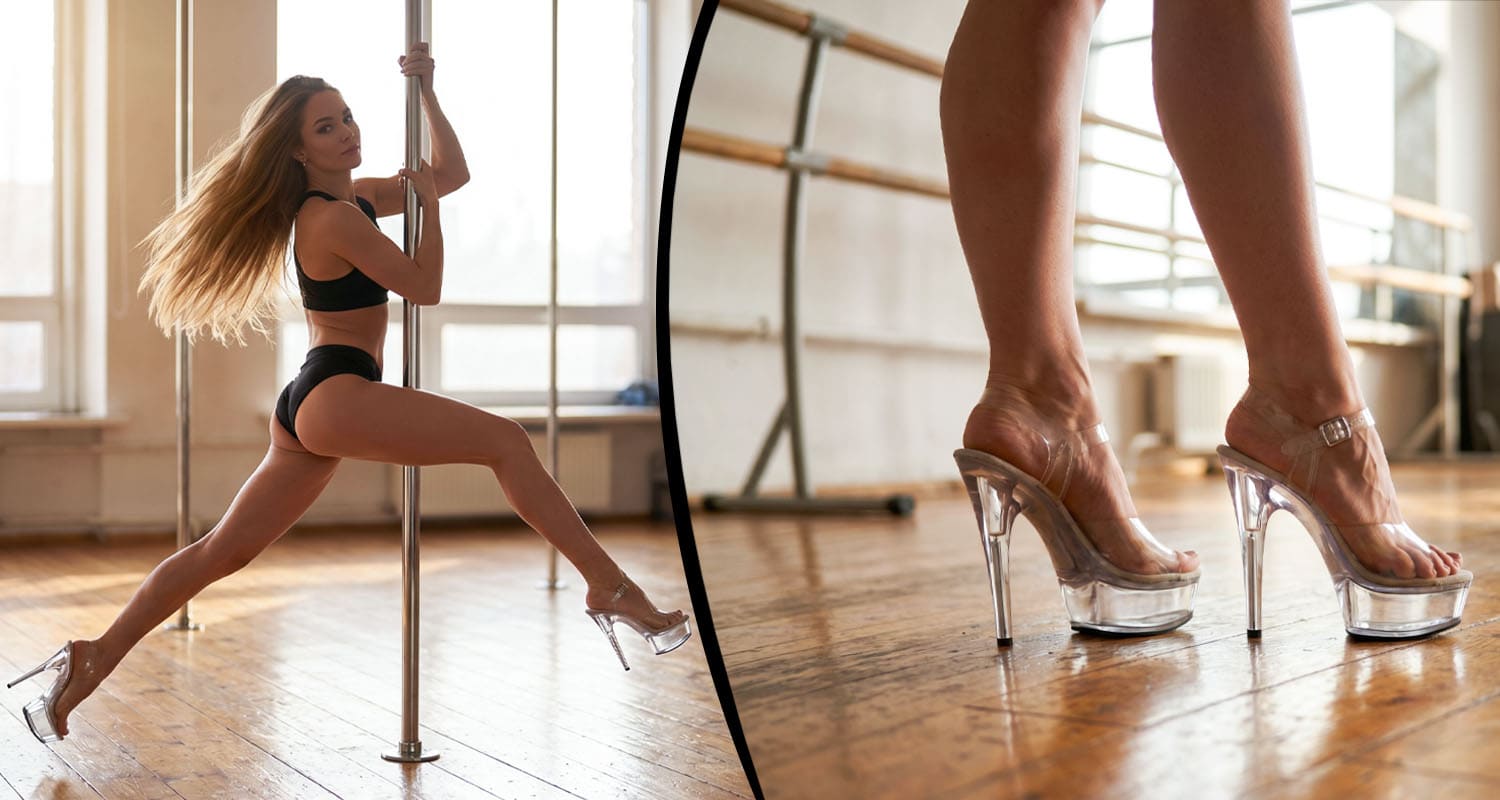
The truth is that almost all of these difficulties are not caused by a lack of talent but by the same set of common mistakes. Starting with heels that are too high, weak feet, rushing the process, or choosing the wrong footwear. The good news is that every one of these problems can be fixed.
So let’s go through everything step by step – what “twos,” “threes,” and “fours” mean, which mistakes beginners make most often, and how to build proper technique so that your dance heels bring enjoyment rather than bruises and frustration.
What Twos, Threes, and Fours Mean
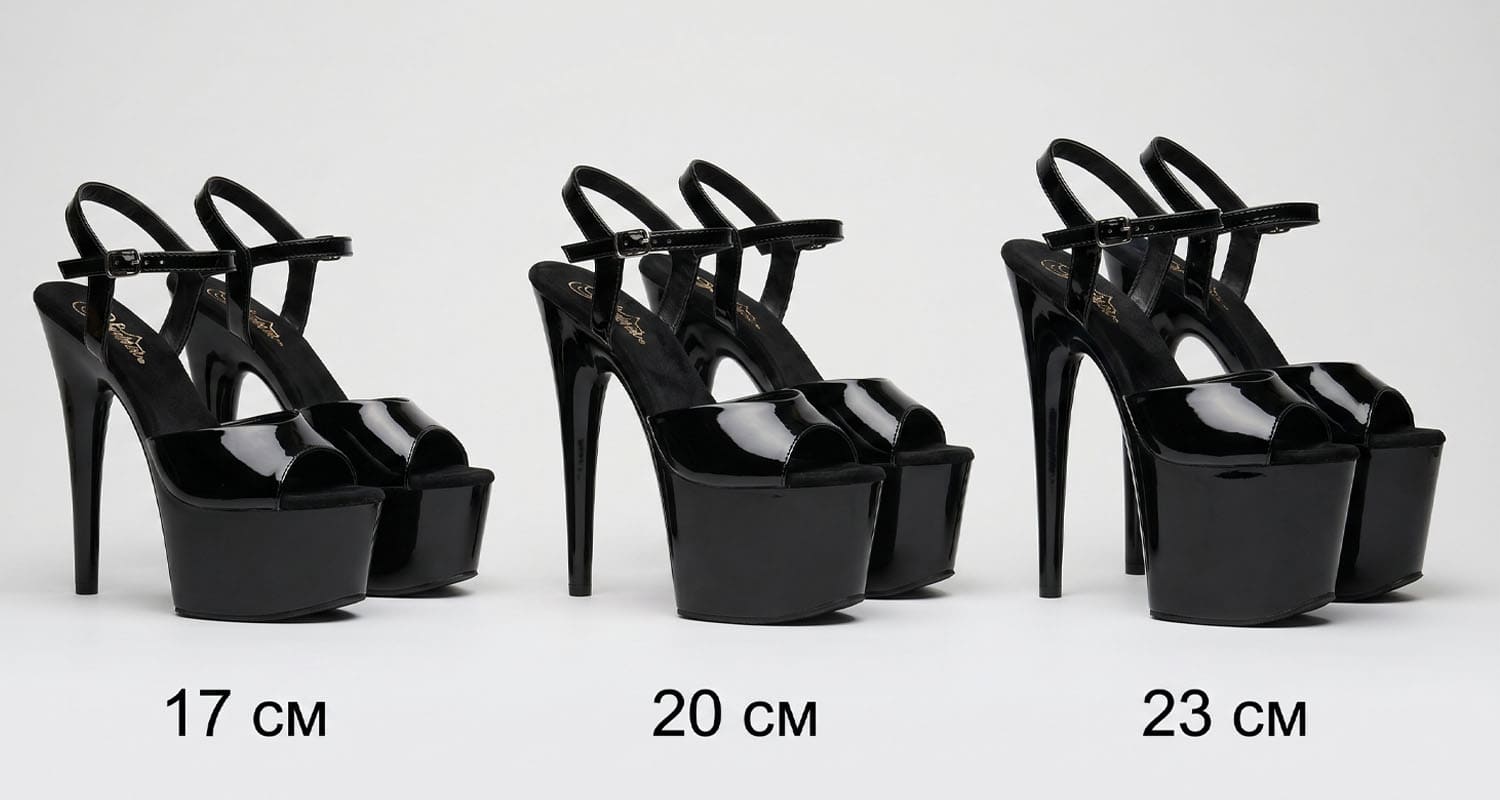
If you’ve just entered the world of dancing in heels, these numbers can be confusing at first. In fact, they refer to heel height. Let’s break them down:
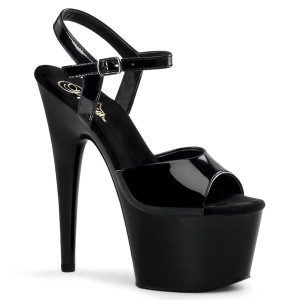
- Twos – a heel height of about 17 cm. The foundation for beginners. This is where you learn to stand, shift your weight, and get used to the angle of your foot.
- Threes – 20 cm. More dramatic but still relatively safe. Most dancers move to them after mastering twos.
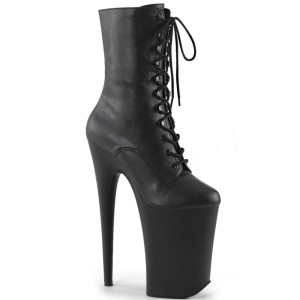
- Fours – a 23 cm heel. Beautiful and eye-catching, but they require solid technique and strong feet.
It’s also important to mention the platform. The higher the platform, the smaller the angle of your foot, which means less strain on the front part of your leg. That is why platform pole dance shoes are usually easier for beginners than High Heels shoes without a platform.
Foot Technique in Pole Dance and High Heels
Now let’s talk about what actually happens to your foot at this kind of height.
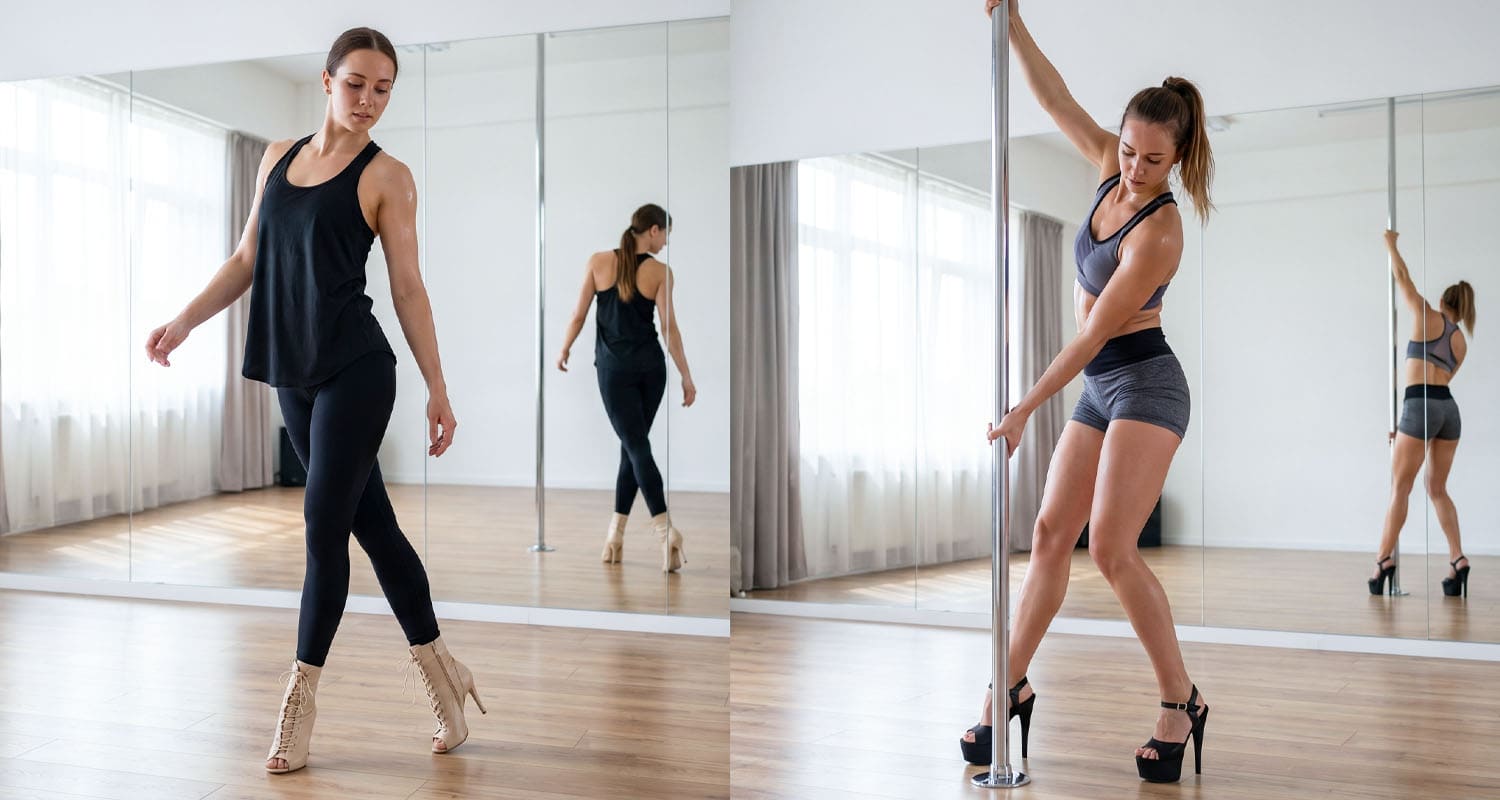
When you wear heels, your support naturally shifts toward the front of the foot. That is completely normal. The problem is that beginners often place all of their weight on their toes. As a result, the foot collapses inward and balance disappears. In reality, the weight should remain evenly distributed throughout the foot, while the heel, even though it is elevated, stays active as if you are gently reaching it toward the floor. This allows the foot to work as a stable support rather than a shaky stand.
The same principle applies to walking. In regular shoes, we step from the heel to the toe. In heels, the toe and heel make contact almost simultaneously and very smoothly. This creates an even weight distribution and produces a fluid walk without stomping or collapsing into each step.
When the foot is positioned correctly, everything else starts working better too. Rolls and transitions become smooth instead of jerky, which is both more attractive and safer for the ankle. A pointed foot in the air completes the movement and creates a clean, finished line.
And all of this is developed slowly. First, the body learns how to manage weight correctly, and only then do speed and music come into the picture.
Why Balance Problems Happen in Heels
You may know the technique and still feel unstable. That is because the issue is not only in the foot but also in the physics and physiology of the body.
When you stand in heels, your center of gravity shifts forward and upward. A body that is used to standing on the entire foot suddenly finds itself in completely different conditions. The support area becomes smaller, and the load moves to the front of the foot. Your brain has to relearn how to maintain balance, and at first, it honestly struggles to do so.
Now add weak stabilizing muscles to the equation. These are the small muscles of the feet, ankles, and core that barely work during everyday life. In heels, they are responsible for stability, and if they are not trained, your legs shake and become tired very quickly.
The third reason is purely psychological – the fear of falling. Fear creates tension throughout the body, and a tense body balances much worse than a relaxed one.
It becomes a vicious cycle – I’m afraid of falling → I tense up → I lose balance → I become even more afraid.
The conclusion is simple: balance in heels is not an inborn gift but a skill. It develops through strengthening the right muscles and gradually teaching the body to adapt to a new position.
When to Move from Twos to Threes and Fours
There is no universal timeline. Everything depends on your body, your training frequency, and your overall preparation. However, there is one simple guideline – move up only when you feel comfortable at your current height.
In practice, this means:
- You can stand and walk confidently without looking at your feet.
- You can maintain balance on one leg.
- You can comfortably perform a turn and a roll without feeling like you are about to fall.
- Your foot remains stable, and your ankles do not ache after training.
- If all of these points describe you, it may be time to try the next height.
What you definitely should not do is skip a level. Going straight from twos to fours is not recommended, no matter how tempting it may seem. Each height prepares your body for the next one:
- it strengthens the feet;
- it develops balance;
- it builds proper movement habits.
If you skip a stage, those missing foundations will show up later as pain and a loss of control on higher heels.
On average, mastering each height takes anywhere from several weeks to a couple of months. And that is completely normal. It is far better to stay on twos a little longer than to spend months correcting mistakes on fours.

The Most Common Pole Dance Beginner Mistakes
Now let’s talk about the mistakes that beginners stumble over most often. Nearly everyone makes them, and they are exactly why the journey toward confident dancing can take much longer than necessary. Here are the six biggest ones:
- Wanting to start on fours right away. Without a foundation, this leads to ankle pain and poor technique that takes longer to fix than to learn correctly from the beginning.
- Believing that all of your weight should be on your toes. In reality, this causes the foot to collapse inward and makes your legs tired within minutes. Weight should be distributed throughout the entire foot.
- Being afraid of falling. This causes the shoulders to rise, the back to round, and the body to tense up. Heels require a straight back and a relaxed upper body; otherwise, movements look stiff and unnatural.
- Trying combinations before strengthening the feet. The result is shaky legs and fatigue before the warm-up is even over.
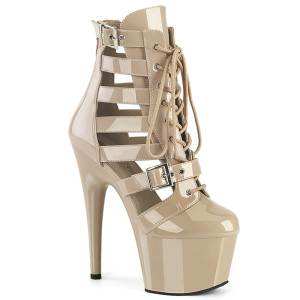
- Choosing strip heels without straps or laces. They may look beautiful, but the foot moves around inside the shoe, and during spins, this becomes a direct risk factor for ankle injuries.
- Wanting to move quickly and dance to music immediately, skipping slow practice. However, technique is built through slow repetition, while speed comes naturally later.
Notice how almost all of these mistakes come down to rushing. Heels do not reward impatience, but they generously reward those who progress step by step.
How to Improve Your Technique in Strip Heels and High Heels Without Rushing
Now let’s talk about what you can actually do. Just a few minutes of practice at home can help strengthen your body and improve your relationship with heels. Here are the basics:
- Calf raises. Barefoot, slowly rise onto the balls of your feet and lower yourself just as smoothly. This strengthens the feet and ankles that support your entire balance.
- Single-leg balance. Hold for 30–60 seconds on each leg. To make it more challenging, close your eyes. This develops the exact kind of stability beginners usually lack.
- Heel-to-toe weight shifts. These teach you how to distribute weight throughout the entire foot instead of dumping it onto the toes.
- Foot stretching. Point and flex your feet, then rotate them in both directions. This reduces tension and helps protect ligaments from strains.
- Walking around the house in your strip heels. Simply put them on and walk around while doing everyday tasks. Your body gradually adapts to the height without the additional demands of dancing.
Just 10–15 minutes a day is enough to notice a difference within a couple of weeks.
How to Choose Strip Heels and High Heels as a Beginner
Finally, it is worth talking about footwear. Even excellent technique can be held back by the wrong pair of shoes. Instead of focusing on shine and decoration, pay attention to:
- secure support – straps, laces, or a closed heel that prevent the foot from moving around;
- a platform that reduces pressure on the front part of the foot;
- a soft cushioned insole that does not cause rubbing;
- high-quality materials such as eco-leather, patent finishes, or suede that maintain their shape and flexibility.
Start with twos on a stable platform with reliable support, and your first steps will feel much easier.
Most importantly, remember this: dancing in heels is mastered not by the most talented people but by the most patient ones. Do not skip heights, do not chase speed, strengthen your feet, and avoid repeating common mistakes. Take your time, and one day you will realize that you are no longer thinking about your heels at all—you are simply dancing and enjoying yourself. And that is the real goal.
 Previous
.png) World
World
 Deutschland
